
Meeting Students Where They Are: School-Based Health Centers Expand Access to Care in Martinsville-Henry County
It’s 7 a.m. on a Tuesday. A child wakes up with a cough, but getting to a healthcare appointment isn’t always simple. Her parents may have to leave work, find transportation, or wait days for an available appointment. Too often, those barriers lead to delayed care and missed school.
For many families across Martinsville-Henry County, these kinds of situations are everyday realities. And when students can’t access the care they need, the effects extend far beyond their health, impacting attendance, learning, and future opportunities.
As Dr. Sandy Strayer, program officer at The Harvest Foundation and retired superintendent of Henry County Public Schools, puts it, “You can’t teach students who aren’t there.”
That’s why the Harvest Foundation spent more than two years working alongside local school districts, healthcare providers, and national experts to bring healthcare closer to students.
School-Based Health Centers at a Glance
- Expand healthcare access for students
- Complement existing healthcare providers
- Provide school health services close to where students learn
- Reduce barriers like transportation and scheduling
- Support healthier students and stronger schools
Building A Community Solution for Martinsville-Henry County
When the Harvest Foundation began exploring ways to improve healthcare access for local students, the goal wasn’t to build clinics. It was to remove barriers that too often stand between children and the care they need.
The solution didn’t happen overnight. Over more than two years, Harvest worked alongside school leaders, PATHS, Connect Health + Wellness, and the School-Based Health Alliance to research successful models from across the country, analyze local health data, visit existing programs, and build the partnerships needed to create a sustainable approach for Martinsville-Henry County.
Throughout the process, Harvest played the role it knows best — not as the operator of the centers, but as a catalyst for bringing people and resources together. The Foundation funded planning and implementation, convened education and healthcare partners, and used research and community data to shape the initiative.
“We were the funder and the convener, which is where we should be.”
—Dr. Strayer
Today that work is becoming a reality through two school-based health centers, supported by more than $6.3 million in Harvest Foundation funding:
- Laurel Park Middle School in Henry County: Connect Health + Wellness is currently providing services at the school one to two days a week with a new building planned for the health center.
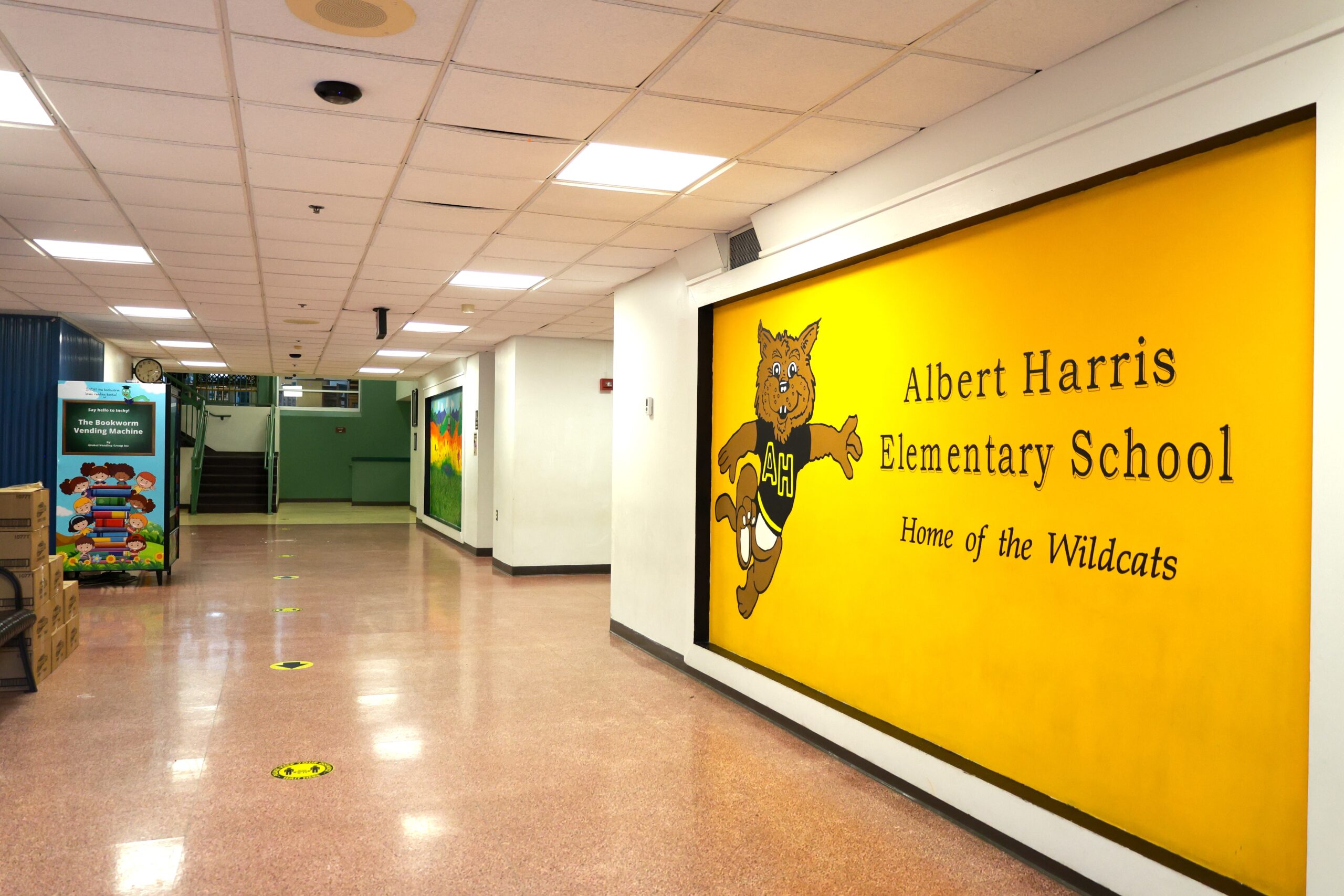
- Albert Harris Elementary School in Martinsville: The health center, operated by PATHS, is expected to open once renovations are complete, currently anticipated for the end of the 2026-27 school year.
But what exactly is a school-based health center, and how will it benefit local students and families?
What Are School-Based Health Centers?
A school-based health center is a partnership between a school and a healthcare provider that brings medical care closer to where students already spend much of their day. The centers can be either inside the school building or in a separate building on school grounds. All are staffed by licensed healthcare professionals and are designed to complement — not replace — a child’s pediatrician or family doctor.
School-Based Health Centers May Offer
- Treatment for minor illnesses and injuries
- Behavioral health services
- Preventive care
- Dental care
- Vision services
For many families, a visit to the doctor can mean taking time off work, arranging transportation, or waiting days for an available appointment. School-based health centers reduce those barriers by making care more convenient and accessible. When students can be evaluated by a licensed medical provider at school, families and educators can make more informed decisions about whether a child needs to go home or can safely remain in class.
“When a medical professional can determine that a student is well enough to remain at school, it has a significant impact,” said Dr. Strayer. “It keeps students in the classroom, reduces unnecessary dismissals, and maximizes instructional time.
But the benefits extend beyond treating illness. By emphasizing preventive care, the centers help students build healthy habits and become more engaged in their own well-being.
“Hopefully preventive measures teach kids early on to be their own healthcare advocate,” said Dr. Strayer. “We want to put in kids’ minds that these are lifelong health habits.”
While the centers will initially serve students and staff, the long-term vision is to strengthen healthcare access across Martinsville-Henry County by connecting more families with the care they need. As the program grows, partners hope to offer:
- Telehealth appointments
- After-hours appointments
- Services for students from additional schools
- Expanded access for the broader community
Looking Ahead: A Healthier Martinsville-Henry County
The opening of these school-based health centers marks an important milestone, but their greatest impact will unfold over time. As students gain easier access to care and families face fewer barriers, the benefits have the potential to extend far beyond the classroom.
For The Harvest Foundation, that’s the power of long-term community investment. By bringing healthcare closer to students, the Foundation is advancing its vision of a Martinsville-Henry County where every child has the opportunity to learn, grow, and thrive.
Frequently Asked Questions About School-Based Health Centers
What is a school-based health center?
A school-based health center is a partnership between a school and a healthcare provider that brings medical care closer to where students learn. The centers are designed to complement (not replace) a child’s primary care provider by making it easier to access timely healthcare.
How do school-based health centers improve access for children?
School-based health centers make healthcare more convenient by providing services where students already spend much of their day. This helps reduce barriers such as transportation, scheduling conflicts, and missed work for parents while making it easier for children to receive timely medical care and return to learning.
Where are the school-based health centers in Martinsville-Henry County?
Two school-based health centers are opening in Martinsville-Henry County: one at Laurel Park Middle School, operated by Connect Health + Wellness, and one at Albert Harris Elementary School, operated by PATHS.
Are the school-based health centers in Martinsville-Henry County open?
The school-based health centers are in different stages of development. At Albert Harris Elementary School, the health center, operated by PATHS, is expected to open after construction and renovations are complete. The current timeline is at the end of the 2026-27 school year. At Laurel Park Middle School, plans include a new building for the school-based health center. In the meantime, Connect Health + Wellness is currently providing services at the school one to two days a week.
Who can receive care at the school-based health centers in Martinsville-Henry County?
Initially, the centers will serve students and staff at Laurel Park Middle School and Albert Harris Elementary School during the school day. Partners hope to expand access over time through initiatives such as telehealth, after-hours appointments, and additional community services.
How can my child receive care at the school-based health centers in Martinsville-Henry County?
Before a student can receive services, a parent or legal guardian must complete and sign a consent form. Once the signed consent form is on file, students can receive services available at their school’s health center.
What services do school-based health centers provide?
Services may include treatment for minor illnesses and injuries, behavioral health services, preventive care, dental care, and vision services. Available services may vary by location.
How much do services at the school-based health centers cost?
The health centers will bill insurance when available. However, no eligible student will be denied care because of an inability to pay.
Do school-based health centers replace my child's doctor?
No. School-based health centers are designed to complement care from a child’s pediatrician or family physician. They connect students with timely care while encouraging families to maintain relationships with their existing healthcare providers.
Why did the Harvest Foundation invest in school-based health centers?
The Harvest Foundation worked with local schools, healthcare providers, and community partners to address barriers to healthcare access for students. By serving as a convener, catalyst, and investor, the Foundation supported the development of a long-term solution designed to improve health and educational outcomes across Martinsville-Henry County.