
From the desk of The Harvest Foundation President Kate Keller
Next month, we’re going to launch our community-wide visioning process that will strive to include everyone from every corner of Martinsville and Henry County to chart a path for our next 25 years. My goal for this month’s blog is to write about community unity and coming together to create this shared future for us all. I must admit, with the climate in our local community and country, getting in the mindset to write has been difficult. Our news and social media feeds are full of anger, distrust, and oftentimes, violence. Neighbor fighting or defending the neighbor. Division amongst our elected officials. No one has a path forward.
In moments like these, it’s easy to retreat inward, to focus only on the short-term, or to assume that big decisions are best left to distant institutions. But when the broader landscape feels unsettled, it is often at the community level that clarity, resilience, and hope take root.
Coming together to plan for the future is not about ignoring the current climate, predicting every challenge ahead, or pretending that uncertainty doesn’t exist. It’s about choosing, collectively, to respond rather than react. It’s about neighbors, businesses, nonprofits, and local leaders asking a simple but powerful question: What kind of place do we want this to be 25 years from now?
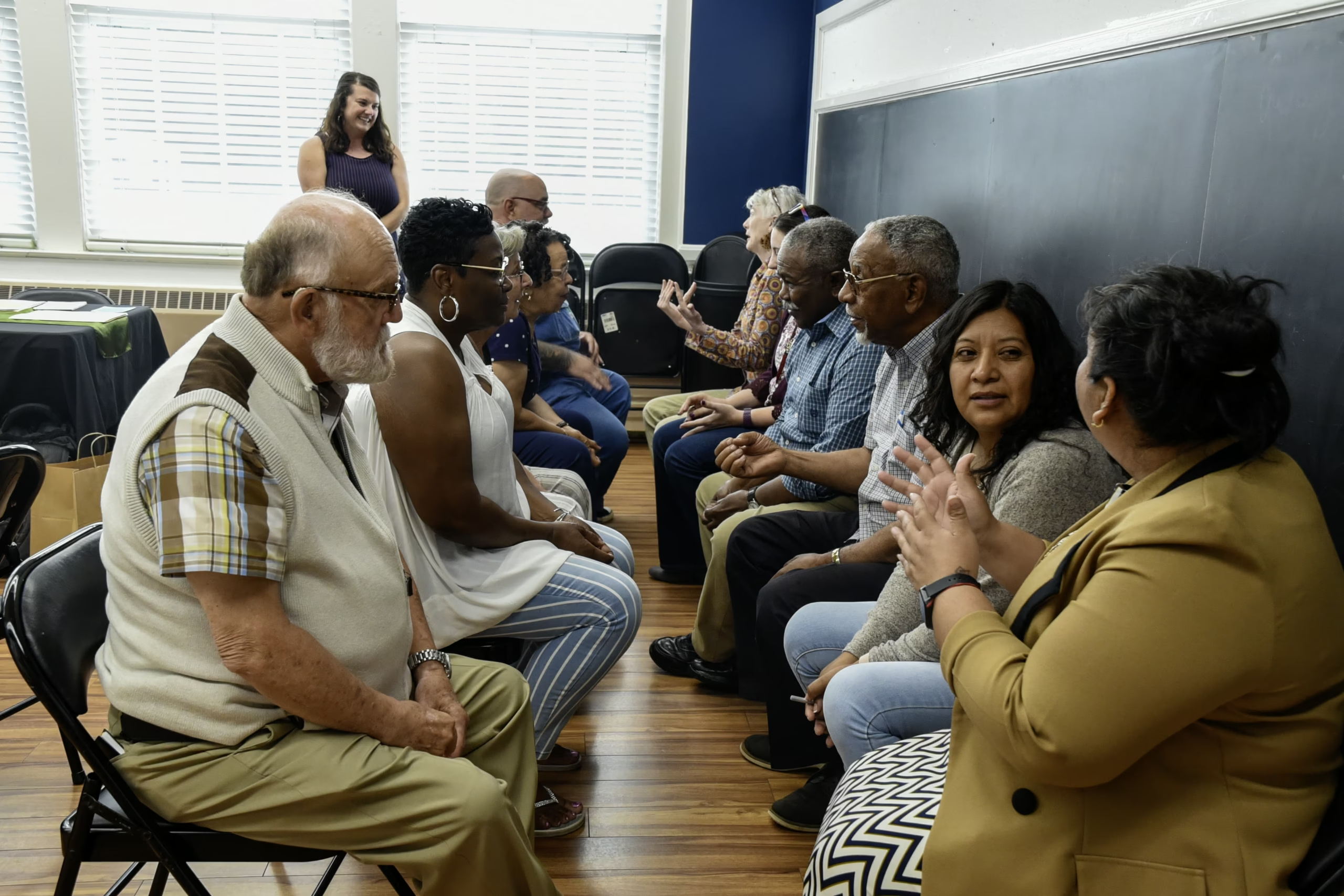
Community planning creates space for shared values to rise to the surface. It allows people with different experiences and perspectives to listen to one another and discover common ground. In a time when national conversations often feel polarized and overwhelming, local visioning reminds us that collaboration is still possible and effective.
Importantly, planning together strengthens trust. When residents are invited into the conversation, when their voices are heard and reflected in long-term goals, the future stops feeling like something that “happens to us.” It becomes something we are actively building. That sense of ownership matters. It fuels civic engagement, encourages investment, and helps communities weather challenges with greater confidence and cohesion.
Community planning is not about having all the answers today. It’s about setting direction. It’s about aligning resources, priorities, and partnerships around a shared vision so that when change comes — as it always does — we are better prepared to meet it together.
Perhaps most importantly, the process itself builds relationships and resilience. The conversations, relationships, and shared understanding that emerge from planning don’t disappear when a plan is written. They become a foundation the community can return to again and again, especially when new challenges arise.
In times of nationwide uncertainty, coming together locally is a powerful reminder of where our greatest influence lies. The future may be complex, but it is not out of reach. It begins with people showing up, listening deeply, and imagining boldly — together.
And that is how communities don’t just endure uncertain times. They grow stronger because of them.